Next level intentionality with Ezra Frech
Paralympic champion Ezra Frech’s mindset offers powerful lessons beyond sport. This article explores commitment, discipline, gratitude, and action — showing how intentional daily habits, reframing pressure, and relentless execution separate high performers from the rest, and how these principles apply directly to cricket and personal performance.
Marc Ellison
2/21/20264 min read
What separates elite performers isn’t talent. It’s how they interpret sacrifice.
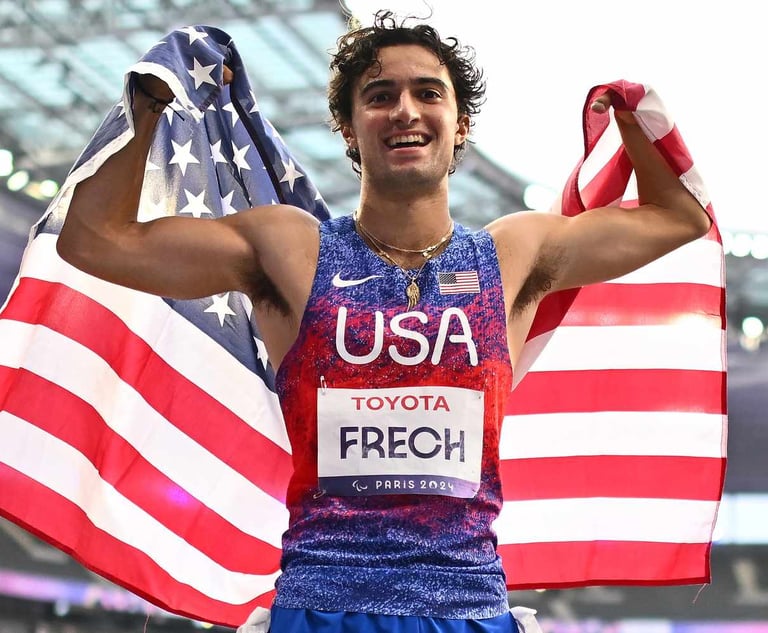
Ezra Frech embodies this better than anyone I’ve recently come across.
Listening to him, I realised many of his principles mirror what separates consistent cricketers from talented ones.
His story is remarkable.
He was born with congenital limb differences. In layman’s terms, that means he has one fully functioning arm and one fully functioning leg. He’s a two-time Paralympic gold-medallist, competing in high jump and the 100 meters.
I like to read and consume a whole range of content from outside of cricket for inspiration and innovation. As such, Ryan Holiday’s Daily Stoic podcast is one of my regulars and Ezra featured in January.
I don’t follow much US sport and so he’d never crossed my radar until the last few months and he’s clearly a mentality monster.
Faced with the typical prejudice and attention that any child with a disability experiences growing up, so many personalities struggle to deal with the spotlight and naturally shrink. Frech is the opposite. He comes across as assured as any of the top Hollywood actors.
In his 53-minuite discussion with Holiday, they touch on some transferable topics when it comes to cricket, such as commitment to his craft, dealing with pressure and expectation and manifestation.
The Everyday Discipline Advantage
“On paper I am not a normal college student. I don't have the luxury that most college kids have where they can just hang out and chill all day and go hang out with their friends or go to a party and stay out super late. I'm in bed super early. I'm getting good sleep. I'm not out. I don't drink or do any of this other stuff. And so, to the average person, that looks like one of those things that sucks. What a burden. You have to do this. You have to do that. You have to get up and go to the track. But I see it as: I love this. This is so enjoyable. I don't even characterize it as a negative thing,” said Frech.
We’re faced with the very real challenge today of needing to be better than 90-95% of those around us in order to get a look in with our chosen pursuit.
Some of us have put thousands of hours into our craft or have been blessed with a wealth of or proximity to the best resources or perhaps have been given genetic advantages.
Sure, we all develop at different rates, but what ultimately separates the best from the rest is an attitude that commits to taking action every day; action that drives you towards your goals.
Frech is stating here just how much he enjoys being an everyday guy. It’s not a sacrifice for him to spend less time with his friends or not go out to parties and to put substances into his body that will compromise what he needs right now.
What he needs is a good night’s sleep, the best nutrition and to consistently look after and train his body so that he can reach peak performance at specific times of the year.
He goes on:
Reframing Sacrifice
“Or for example, I don't eat sugar. I don't eat any desserts all-year-round. And my family thinks I'm crazy. They’re like, ‘just have one bite of the cake.’ I don't. I won't even have one bite. One bite. Nothing. It’s just off the table. And to the average person, it's like ‘what a miserable life.’ But it's like no, I love this. I love eating the steaks. I love eating healthy. I love the opportunity to be in better shape when the season rolls around and perform at the highest level. So, I don't see it as a negative, if that makes sense.”
This is next level intentionality.
He knows what helps peak performance and he knows what hinders it and, in his quest to be the ‘greatest Paralympian in history,’ he’s giving himself the best chance of success.
While he’s also made his lofty ambitions public, one would expect that comes with an added level of scrutiny and expectation. He’s adamant he doesn’t see it that way:
Pressure vs Excitement
“I feel like we often convince ourselves of things a little bit too much and then they become our reality. You know, my mom growing up, every time I was nervous or worried about something, she'd always be like, "You're not nervous, you're excited." In the body, it's the same thing. Like, convince yourself you're excited about these things. It's become my reality, which is: I love this opportunity. I see it as an opportunity. I don't see it as anything negative.”
Whether he truly feels no pressure is impossible to know, but his framing of pressure as opportunity is what matters.
However, his mentality is undeniably impressive. Being so grateful for what he has in life, when he has less than the majority of the population, is unique and is perhaps a key reason why he’s one of the best paralympic athletes in the world.
Frech also refers to reading about what Stoic philosophers thought about manifestation alone not being enough when it comes to achieving ambitious targets:
Manifestation + Action
“Action is the one thing you need to add to manifestation to make it happen. Thinking about it (your goal) is worthless if you’re not intentionally trying to pursue that thing. I do wholeheartedly believe that if you are thinking about something and then also in pursuit of that thing aggressively, I think you have a higher likelihood of accomplishing it than if you have no emotional attachment, don't care at all. But I read that this morning and it reminded me of just sort of this whole process of like action is everything here and it's the person who takes more action that will be more successful. Oftentimes just thinking about it means you're going to take more action.”
Let that sink in.
‘It’s the person who takes more action that will be more successful.’
Talent matters. Resources help. Genetics play a role.
But ultimately, progress belongs to the person who takes action. Again and again. Long after motivation fades.
Does that statement ring true for you?

Follow us on Social Media
CONTACT
Want to hear from us every Month?
+447516707258
© 2026. All rights reserved.